Post offices as a communication infrastructure, cultural circulation nervous system, They constitute daily public meeting points and one of the spaces of representation of the modern state. Post offices are not only the points where letters or telegrams are sent, they can be considered as a threshold point in urbanization, where bureaucracy reaches the local level, enabling the coexistence of different languages, identities and classes. While evaluating the urban culture of İzmir within its historical context, post offices and their representation in everyday life create an opportunity to observe the multiculturalism of İzmir.
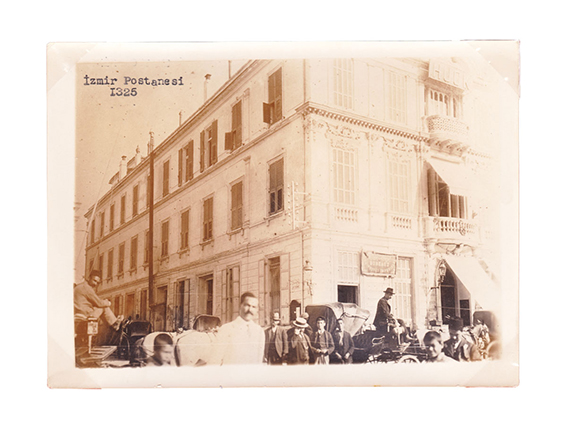
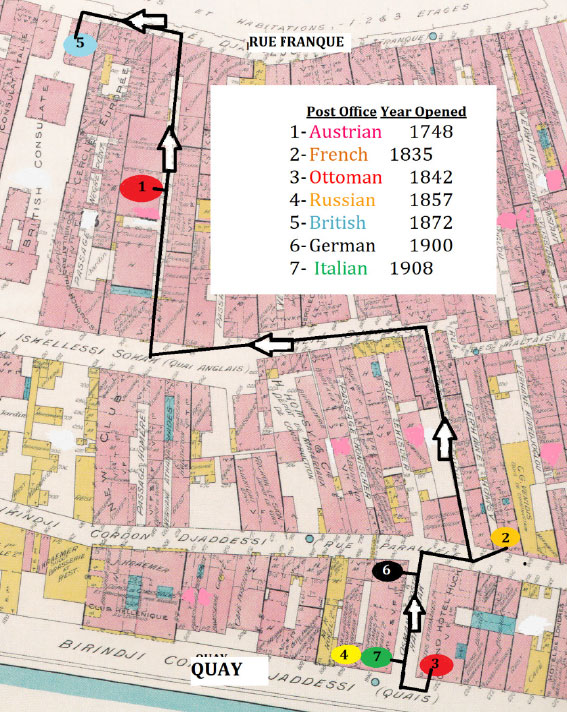
Sultan Mahmud II, who ascended to the throne at a time when there were fragmentation tendencies within the Ottoman Empire, ayans ruled large regions as a local power, and therefore the need for communication and demonstrating the power of the center in the provinces increased, shaped his entire policy on the basis of reformism and centralization. The renewal efforts and regulations of this period are evident even in the system of traditional communication and communication institutions. The first post office, established in Istanbul in 1840, aimed to ensure order in the country through the regulation of communication-related business and transactions, and to generate additional revenue for the treasury by enabling the public to benefit from the new communication system. On the other hand, in the country where there were no public post offices before 1840, which were used only for official correspondence, private and commercial mail was delivered by individuals, ship captains, agencies and various consular post offices. In 17th century Izmir, an important port city with a large volume of commercial activity, long-distance communication was vital for the development of trade in the city. The communication provided through ’captain's letters“ delivered by Izmir merchants to the captains of merchant ships was institutionalized with the Austrian Post Office, the first regular post office established in 1748. The opening of a foreign post office in Izmir almost 92 years before Istanbul is a trace of the commercial clustering created by the capitulations in Izmir. Indeed, in the 1850s, Izmir was an intellectual and cultural center that hosted 17 consulates and was served by Austrian, French, British, German, Russian, Greek, Greek and Italian post offices in addition to the Ottoman post office. These structures, which facilitated and nourished trade, served as communication infrastructures, first accepting and forwarding the letters of the citizens of the state to which they belonged, and later forwarding letters and other materials belonging to the citizens of other states.
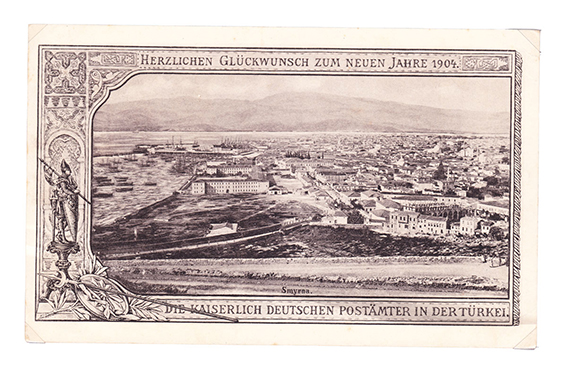
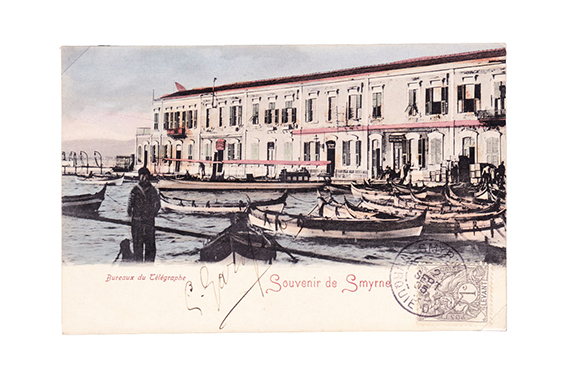
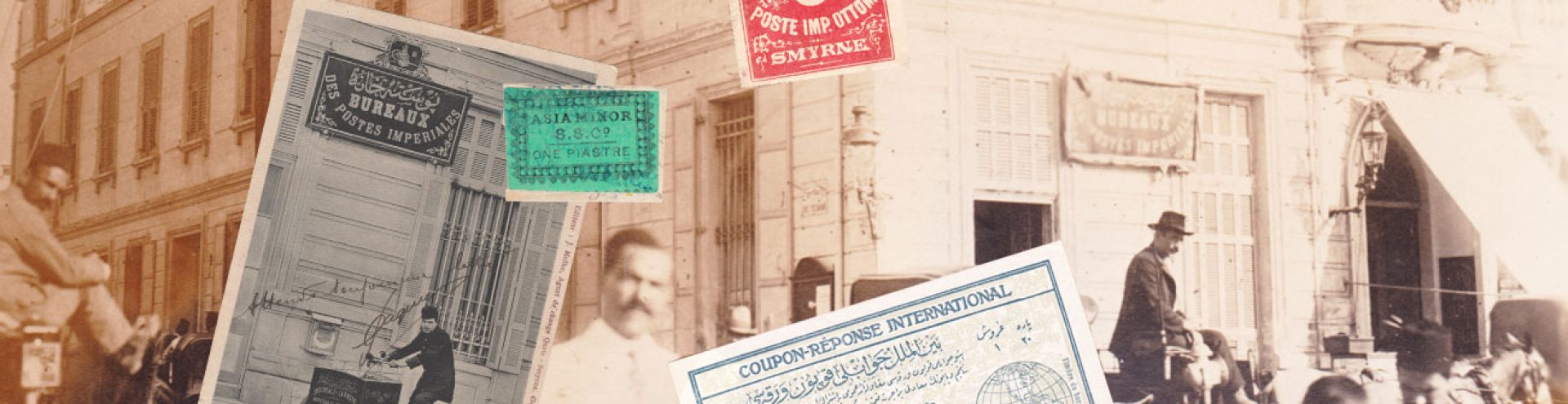
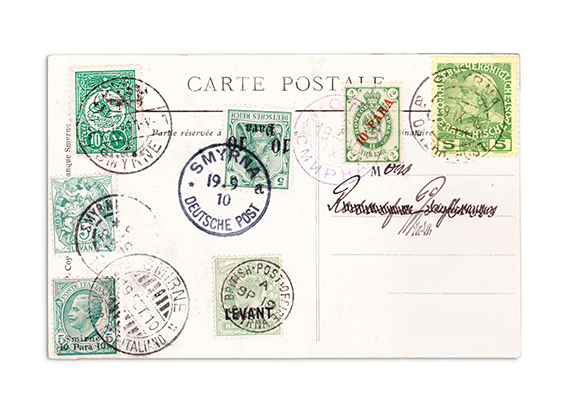
Post offices, whose explicit function is to provide communication services, are elements of visual culture and micro-public cultural spaces that provide social contact. Both functionally and aesthetically, the stamp and seal designs used in post offices are a cultural heritage and propaganda tool that showcases a country's various cultural elements and sources of pride such as art, music, literature, dance and sports. Considering that the use of postage stamps began in England after the 1840s, it can be said that the British Post Office opened in Izmir in 1872 added a visual layer to the urban life in Izmir through postage stamps and postcards. The stamp forms, labels and stamps used in Izmir post offices, and the colors and typographies used on them are symbols of multicultural life.
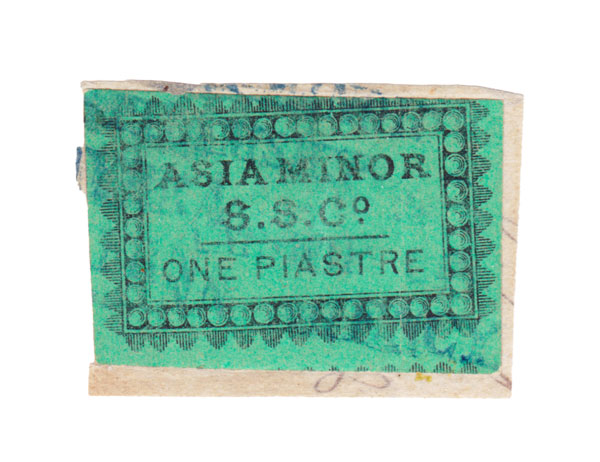
By following the markings of each post office on letters and printed matter, it is possible to draw inferences about the spheres of influence of foreign missions in İzmir, the dominant commercial relations in the city, and the creative habitus. For example, the dark green stamps issued in 1868 by the Asia Minor Steamship Company (Asia Minor Co.), founded by British merchants in the same year, with the words ’Asia Minor Co.“ on them, stand out as one of the first commercial branding efforts for İzmir.
Postcards, one of the most spectacular and emotional representational materials of communication during this period, were the elements that opened elements of Izmir and city life to the world and formed the visual memory of Izmir.
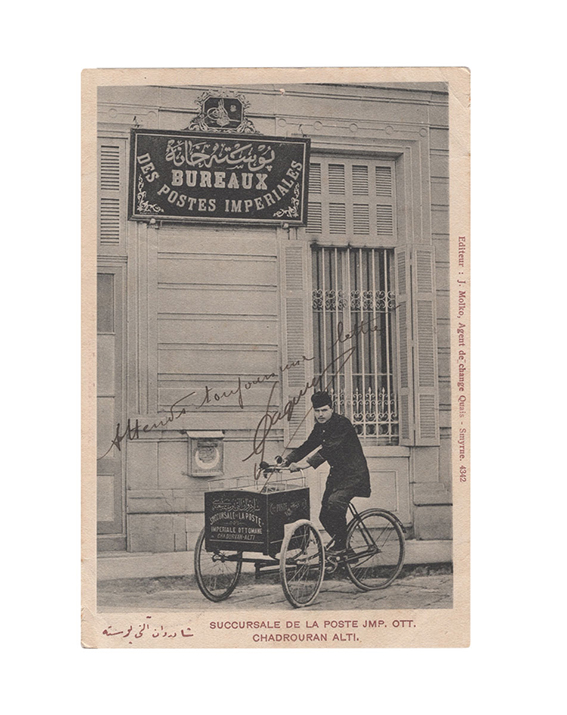
In terms of their spatial composition, post offices constitute the city center of Izmir. The commercial buildings along the promenade line, adjacent to the harbor, are in fact “post offices line” on a vertical visual axis that can be defined as a “communication corridor”. The location of the post offices, especially on the Kordon-Punta-Konak line, also enabled İzmir's coastline to be perceived as a "communication corridor". This corridor, together with consulate buildings, trade houses, foreign postal organizations, insurance and freight companies, constituted one of the most intensive areas of visual information production in the city. Therefore, post offices were not only communication infrastructure, but also The main actors of 19th century Izmir visual culture as a way to make a difference.
For Izmir from the 17th to the 19th century, post offices were not only logistical nodes but also provided a multilingual, multinational and multicultural visual regime that could be read through stamps, stamps, postcards and buildings. İzmir's cultural image was designed and distributed through this visual regime. From a visual communication design point of view, post offices have become a part of Izmir's memory spaces.“early graphic archaeology of urban internationalization”of Izmir. Therefore, the chronological integrity of the post offices is not only a historical sequence, but also a visual narrative that explains Izmir's identity continuity.