
Ayatollah Sumer
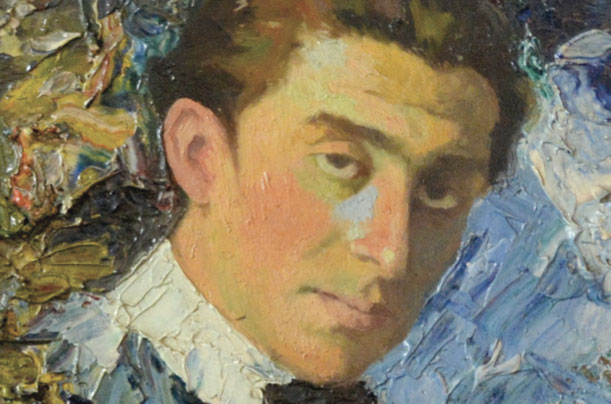
Ayetullah Sumer, one of the leading names of Turkish painting, was born in Izmir in 1905. He started his artistic career in Izmir and continued in Marseille, Paris and Istanbul. Sumer, who grew up under the influence of the changing education system and the understanding of art in the last period of the Ottoman Empire, became one of the pioneers of new ideals with the proclamation of the Republic. Due to his age, he witnessed the War of Independence and the birth of the Republic [...]
Kadifekale from Evliyâ Çelebi's Pen
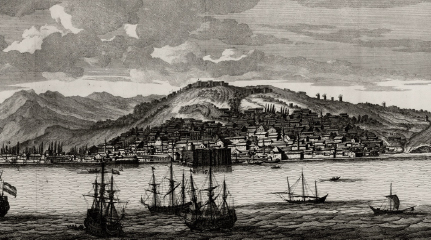
Evliyâ Çelebi (1611-1684?) is undoubtedly one of the world's greatest travelers. His ten-volume Seyahatnâme, a colorful account of the places he traveled for half a century, is a rich treasure trove of information on the cultures, languages and dialects of not only the Ottoman lands but also the surrounding countries. Initially known only to the court elite, the Seyahatnâme was translated into English in 1834 by the famous historian Joseph von Hammer-Purgstall [...].
Composer Râkım Elkutlu's Four Gufte Poets
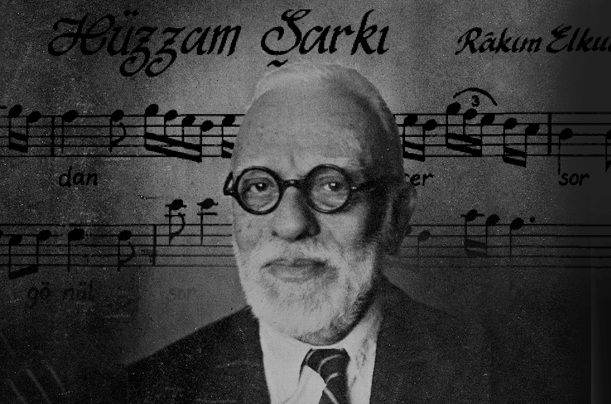
It has been nearly three years since the publication of the third book in the Izmir Development Agency's People of Culture series, “Composer Hoca Mehmed Râkım Elkutlu: His Life and Music” has been published nearly three years ago. As is the case with every book, some new complementary information has become available after its publication. On the occasion of this short article, an opportunity has arisen to record this information. Râkım Elkutlu's five [...]
Izmir Harbor Castle from Evliyâ Çelebi's Pen
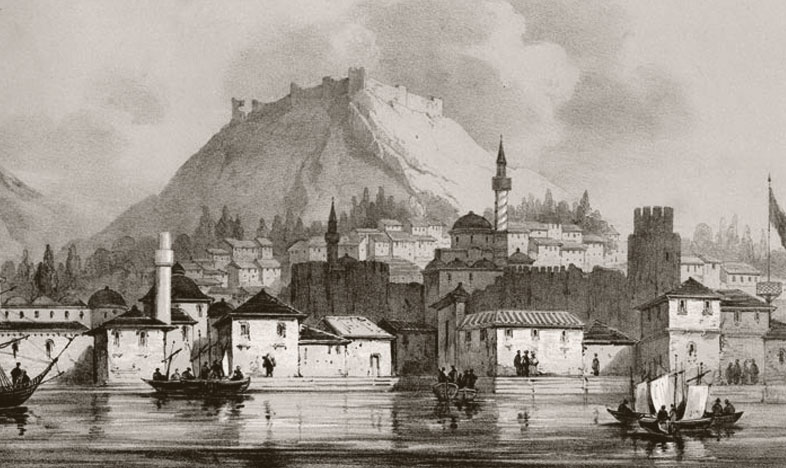
Evliyâ Çelebi was undoubtedly the greatest Ottoman traveler of the 17th century. He traveled the Ottoman lands (Balkans, Anatolia, Western Asia, Middle East, Egypt) and neighboring countries for more than fifty years and collected what he saw and experienced while the empire was at its cultural peak in his famous 10-volume work, Seyahatnâme. Evliya Çelebi has been widely read in many languages for more than three centuries, and his Seyahatnâme is a celebration of the cities and [...]
Watery Cemetery - A Story in History
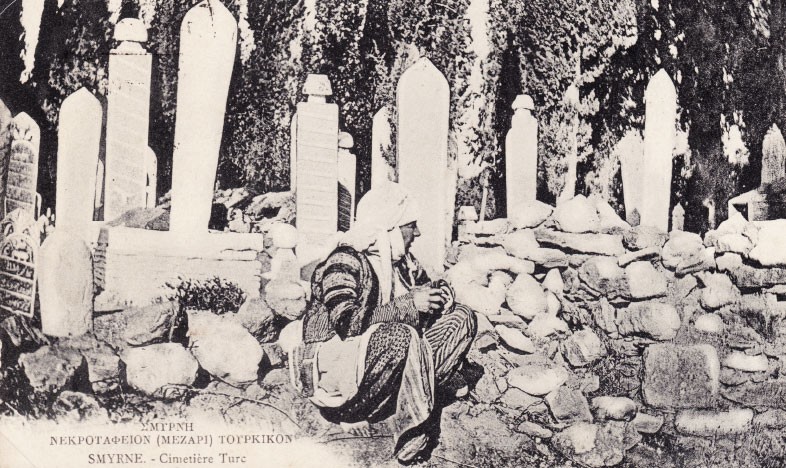
What would you think if you were asked what an ancient Roman bath and a cemetery or a tobacco store have in common? One of the well-known corners of Konak, just opposite the Kâtipzade Masjid, stands out as the site of an interesting story in the history of Izmir... While looking at old maps of Izmir, my eye catches the small cemetery in Konak: Charles Edward Goad's insurance [...]
Caravan Bridge
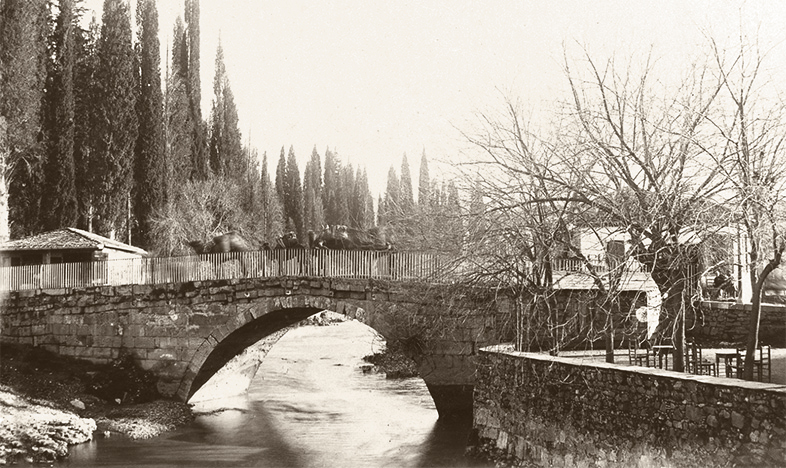
“We went up Pagos Mountain [Kadifekale]. We took a wide tour. The interior is littered with stone fragments that make the castle look like a wasteland. Still, it offers an excellent view of the Gulf of Izmir and the city. Inside is a ruined old mosque. The name Boston is carved somewhere. We went downstairs and visited the [...], a large resort and also the city's gateway to the country.
Anatolia's First Railroads
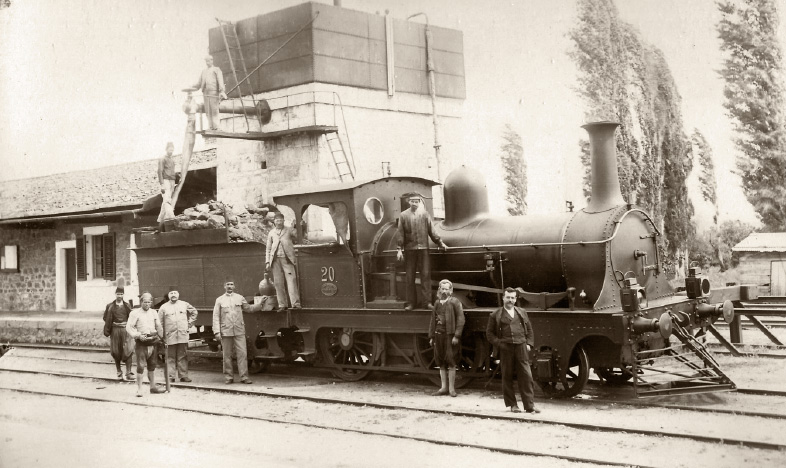
The 1838 Baltalimani Treaty of 1838 and the lifting of export bans raised the potential for an increase in Izmir-based trade. However, caravan trade with camels had significant limitations in terms of duration and volume. Rail transportation offered important opportunities to overcome these limitations and was becoming increasingly widespread in Europe. Among the foreign merchants trading in İzmir, the railroad connection between İzmir and Western Anatolia [...]
The Birth of the Port-City of Izmir
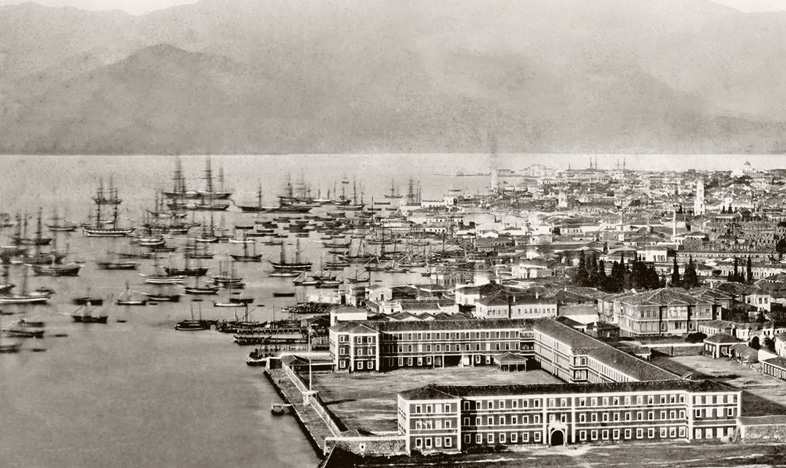
For nearly two centuries after it came under Ottoman rule, Izmir was a small coastal town and an agricultural region, mainly producing produce for the sustenance of Constantinople. From the late 16th century onwards, changing trade routes, especially due to the Ottoman-Iranian war, made İzmir a center for trade between east and west, and the city that would be called the Capital of the Levant [...].
Boghos Tatikyan
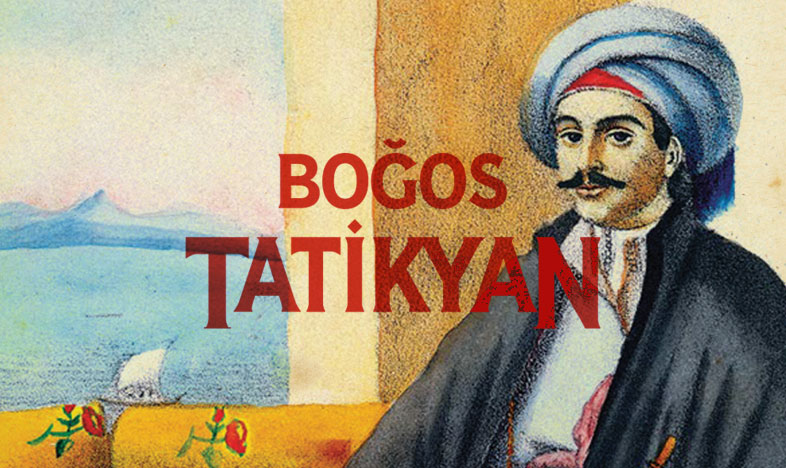
Boğos Tatikyan (1820-?), an Ottoman citizen of Armenian descent, was a prolific painter, lithographer and printer who made significant contributions to the cultural and artistic scene of Izmir in the 19th century. One of the pioneers of Ottoman engraving, Boğos Tatikyan is thought to have been born in Izmir in 1820, and to have started painting in the 1840s; there is no information on his date of death or education [...].
Izmir Kültürpark and Izmir International Fair
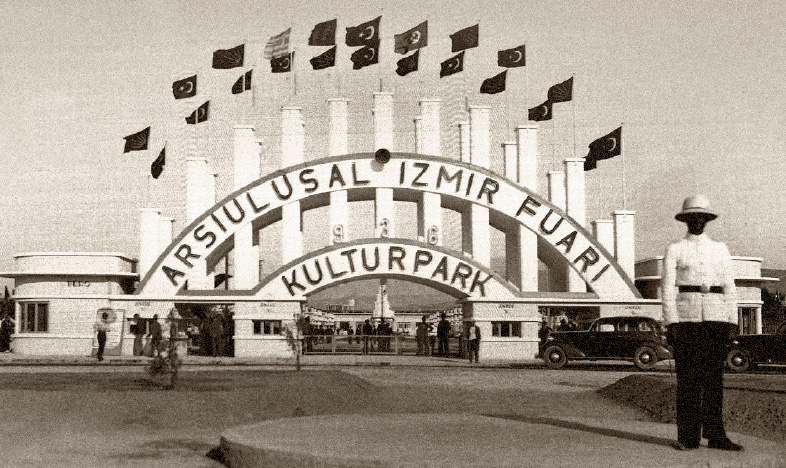
Based on the domestic goods exhibition organized during the Izmir Economic Congress and the September 9th Exhibitions held between 1927-28 and 1933-35, the then Mayor of Izmir, Dr. Behçet Uz, came up with the idea of establishing a fair to support the economic development of the city. During the maturation period of the idea, Suat Yurtkoru, then Deputy Mayor of İzmir, mentioned the Kültürpark in Moscow, which he had visited in 1933, and [...]
Izmir Clock Tower
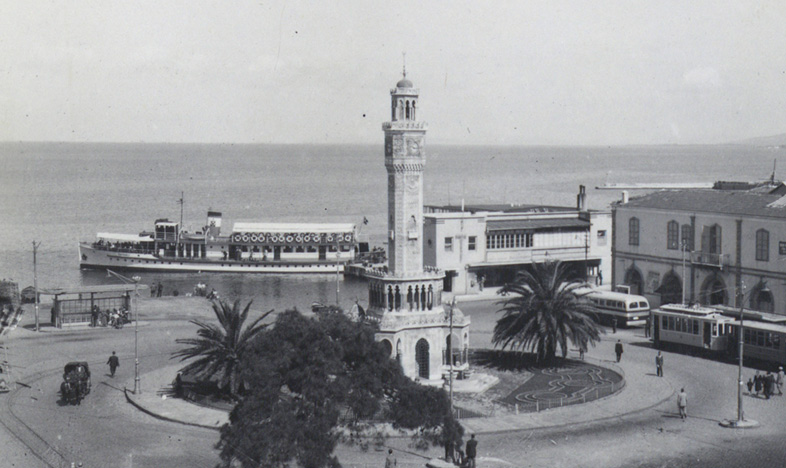
In the heart of Izmir rises an elegant symbol that cannot stop time but carries the past into the present: Clock Tower. This magnificent structure, which harbors the traces of history in every stone and the spirit of the city in every clock wheel, has been the symbol of Izmir for centuries. The pearl of Konak Square is a silent witness of the city's cultural mosaic. In 1900, the 24th anniversary of Sultan Abdülhamid II's accession to the throne was completed and [...]