Izmir is one of the most ancient port cities of the Mediterranean, having been home to many civilizations from ancient times to the present day. Located at the intersection of trade, culture and art throughout history, this city draws attention not only with its geographical location but also with its multi-layered structure. Homer's “the most beautiful city under the firmament” which Herodotus described as “the most beautiful sky and climate on earth” praised by Aristotle to Alexander the Great “if you don't see it, it's incomplete” called Izmir; On the coins issued by the Roman Emperors Gordian and Gallienus “The capital of Asia Minor” It has been described as the "Pearl of the Levant", the "Jewel of Asia" and "Little Paris". Referred to as the Pearl of the Levant, the Jewel of Asia, and Little Paris, the city has been admired by both the Eastern and Western worlds in different periods (Köksoy, 2009, p.29). One of the most vivid spatial projections of this deep historical narrative is undoubtedly the Historical Kemeraltı Bazaar with its history of approximately 2500 years.
Kemeraltı's historical roots date back to antiquity. Starting from the ancient Smyrna Agora and shaped by the inns, bedestens and arastas of the Ottoman Empire, this area has gained a unique structure where different cultures, beliefs and crafts are intertwined with the modern period. From the 17th century onwards, with the growing importance of Izmir in international trade, the bazaar became not only a place for shopping, but also a meeting point for social, cultural and even diplomatic relations. Enriched with the architectural, commercial and cultural traces of Jewish, Armenian, Greek and Levantine communities, Kemeraltı is one of the rare urban areas that has survived to the present day by preserving its multicultural texture to a great extent (Güvenç, 2011; Özgönül, 2015).
Spread over an area of approximately 270 hectares, Kemeraltı is considered one of the largest open-air bazaars in the world. According to 2015 data, Kemeraltı is a trade center with more than 230 business lines, more than 800,000 products, and more than 10,000 workplaces. With its artisans, artists, gastronomy and historical buildings, it continues to be one of the strongest areas that constitute the social and cultural memory of Izmir (Izmir University of Economics, 2021, p.4).
Kemeraltı is not just an ordinary commercial center; it is a living reflection of urban memory, social memory and cultural diversity. In Kemeraltı, which has undergone many physical and social transformations over time, some of the businesses that have survived for more than a century are not only commercial spaces that have witnessed the history of Izmir, but also cultural structures rooted in the memory of the city. Each of them, together with their generations and customers, has contributed to the vibrant structure of Kemeraltı and shaped the identity of the city. Below, a closer look will be taken at these well-established businesses that bear witness to the historical and cultural continuity of Kemeraltı.
Şekerci Ali Galip, one of the oldest businesses in Kemeraltı, was founded in 1884. Registered in 1901, the business was founded by Ali Galip Efendi, who learned the art of confectionery from the monopoly of Greek and Armenian masters. Ali Galip Efendi's nephew, Mehmet Irmak, participated in the Izmir International Fair in 1938 and exhibited the symbol of Izmir, the Clock Tower, which he made entirely out of sugar, at the Şekerci Ali Galip stand and won great acclaim and received the title of Şekercibaşı. The brand, known for its products such as supangle and akide sugar, has been in the memory of the bazaar for five generations. Şekerci Ali Galip, one of the oldest businesses not only in Kemeraltı but also in Turkey, has been representing Turkish Confectionery and Turkish delight in the best way for over 100 years.

Founded in 1905 by Kemal Uluer, As Optik serves in the watch and glasses sector. Located on Milli Kütüphane Street, the optician has been run by the same family for three generations since its establishment.

Founded in 1912 by Mehmet Usta, the business is now managed by the third generation. It is one of the places that keeps the traditional soup culture alive.

Founded in 1913 by brothers Hüsnü and Fahrettin Bey, Yavuz Kitabevi is also known for the fact that Atatürk gave the family the surname “Kitapcı”. Operating in stationery and bookstores, the business continues in the same line of business today and is one of the most important representatives of education and intellectual culture in Kemeraltı.

Founded by Yusuf Aydoğan, Kahvecioğlu Kahve is one of the well-established coffee brands of Kemeraltı. It produces and sells traditional coffee. It continues its activities in the same field today.
Founded in 1885 by Hacı Ahmet Efendi in Manisa, the company started operating in Kemeraltı in 1922. It grew and became a factory under the management of Ziya Ahmet Manisalı during the Republican years and established a production network reaching as far as the Balkans. It continues in the same line of business today.


Founded in 1922 by the Borg family who immigrated to Izmir from Malta, Borg Jewelry is one of the oldest jewelry stores in Kemeraltı. The brand, which has been run by the same family since its foundation, continues its activities in the field of jewelry today.
Founded on October 29, 1923, the day the Republic was proclaimed, by Mustafa Camcı, Camcı Mefruşat is noteworthy both as a symbolic history and as the symbolic beginning of modern Turkey. The fact that it still operates today reveals the value of this place on the axis of cultural continuity and integration with time.
Nacar Watchmaking, which operates in Abacıoğlu Han, was founded in 1923 by Abdülkadir Eriği, a Balkan immigrant. The family also worked as watchmakers in Florina, Greece, their hometown. Today, the business, which is carried on by the third generation, is engaged in watch repair, wholesale and retail watch sales. Many Izmir residents bought their first watch from this shop.

Founded by the Madran family, this business has been operating in the field of shirt production and sales since 1923. This business, which has been passed down from generation to generation as a family profession, is one of the well-established representatives of the textile sector in Kemeraltı. It continues to exist today.
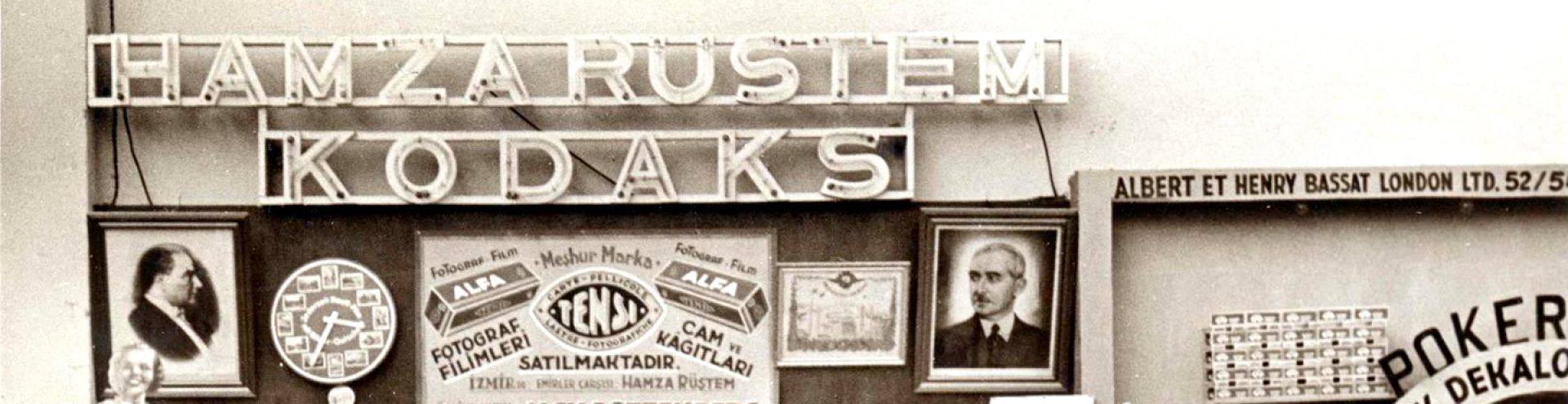
Founded in 1925 by Hamza Rüstem, a Cretan immigrant, this photography studio holds a special place in the cultural and social memory of the region with its founder, who is considered the first Muslim Turkish photographer in Izmir. With its teaching of photography to young people from Crete and its pioneering role in the establishment of the Chamber of Photographers of Izmir and Istanbul, it has left its mark in both education and professional organization. It continues to operate today, maintaining both historical and contemporary photography traditions.

Founded in 1925 by Hamza Dal, the business operates in the texting sector. It is one of the important representatives of the fabric business in Kemeraltı and continues its activities today.

Founded by Osman Efendi in 1926 under the name “Rio Kahve”, the business continued to produce and sell coffee under the brand name “Hüseyin Efendi”. The business has an important place in Izmir's traditional coffee culture and is especially known for its local coffee varieties and grinding techniques. It continues in the same line of business today.

Founded by Pertev Susup in 1927, the business initially started with lemonade sales and evolved into texting and menswear. Kazmirci Menswear, which still serves in the same area today, has an important place in men's fashion and daily wear in Kemeraltı. It continues by combining traditional fabric and design understanding with modern cuts.
Founded by Hamdi Özkanlı, the business initially operated as a grocery store and now serves as a delicatessen. Ankara Gıda Pazarı, one of the well-established food retailers in Kemeraltı, continues to be one of the important centers where local flavors and fresh products are supplied.
Founded in 1929 by Mehmet Emin Taş, the business is one of the rare places that continues the traditional tinsmithing profession. Operating on Havra Street, Tenekeci Sakıp Taş contributes to keeping the artisan identity of Kemeraltı alive by producing with handcraftsmanship and artisanship. Today, he continues his production with traditional methods.

Founded by Binyamin Palombo, Palombo Ticaret is one of the oldest artisan representatives of the Jewish community in Kemeraltı. He started his business life as a broker, selling dried fruits and caviar, and today he continues his activities only in fish eggs. The family has made significant contributions to the multicultural structure of Kemeraltı both commercially and socially, preserving the solidarity and commercial tradition within the community.
Founded by Fikri Eron, the haberdashery business continued its activities in the following years with the partnership of the Eron and Habif families and continues to serve in the same sector today. It has an important place in the traditional retail trade of Kemeraltı. With its product variety and customer loyalty, it has been one of the commercial faces of the bazaar for many years.
Founded by Hasan Kutucuoğlu, the business has been operating in the bijouterie sector since its establishment. Kutucuoğlu Bijouterie, one of the important representatives of Kemeraltı in the field of ornaments and jewelry, is preferred by both local customers and touristic visitors. It updates its product range by combining traditional handcraftsmanship with modern designs.
Üner Moda, founded by Hasan Hilmi Özer, started its commercial life with tailoring and shirt production and today continues with the design and sale of wedding dresses. The business, which attracts attention with its evolution in the fashion sector, is known for its original designs and quality workmanship, which are especially preferred on special occasions. It continues to exist as a family profession passed down through generations.

Over the years, Kemeraltı Historic Bazaar has been home to many locally, nationally and even internationally recognized brands. Together with its artisans and artists, Kemeraltı continues to be a unique urban space that has left its mark on the memory of every Izmirite and fosters a sense of belonging.