Life
Fahri Sümer was born on March 3, 1942 in Bozüyük, Bilecik. Between 1949 and 1952, he attended Yunus Emre Primary School in Eskişehir until the third grade. From an early age, he had a character with high powers of observation and sensitivity to details; these characteristics would form the basis of his understanding of art in the following years. In 1954, he won the boarding scholarship exam of Istanbul Private Darüşşafaka High School. Being a Darüşşafaka student was an important turning point in his educational life. During his high school years, the guidance of his art teachers Kemal Zeren and Kemal Yükselengil played a decisive role in Sümer's artistic journey.
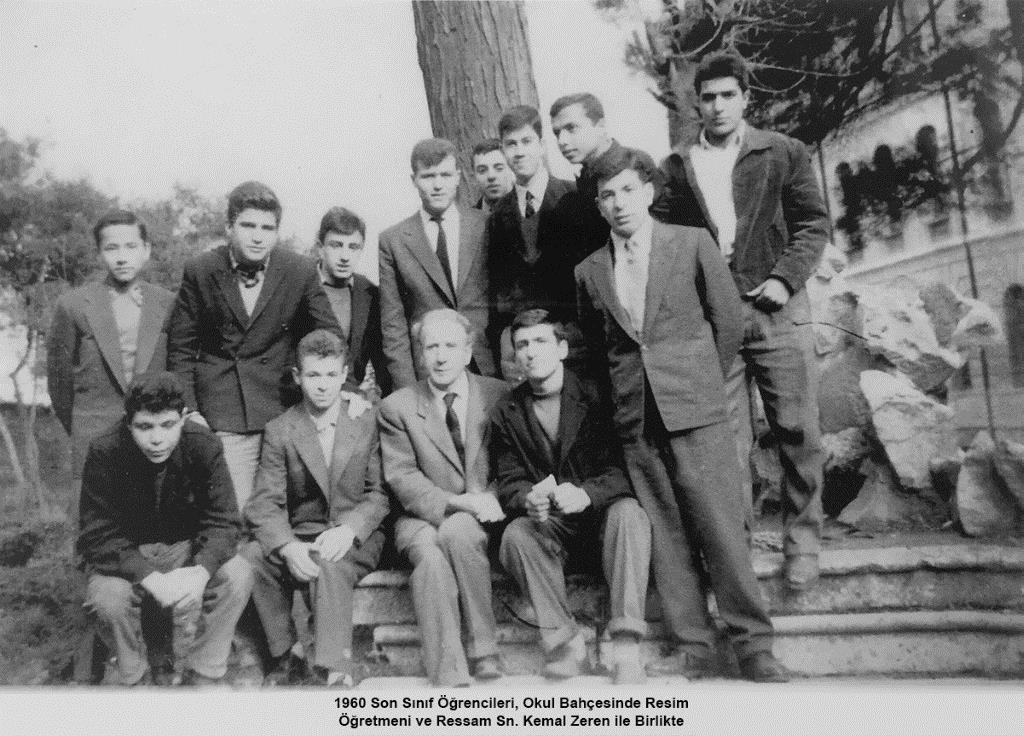
In 1960, he graduated from Istanbul Private Darüşşafaka High School. In the same year, he graduated first in the Painting Department of the Istanbul State Academy of Fine Arts. During his years at the Academy, he studied painting in the studios of Halil Dikmen, Cemal Tollu and Neşet Günal, and worked on engraving in Sabri Berkel's studio. During his studies, he worked part-time as a designer at the Gorbon Ceramic Factory. Sümer graduated from the Department of Higher Painting in 1965 and held his first solo exhibition in Eskişehir the same year.
Between 1965 and 1967, he came to Izmir to do his military service. After completing his military service, he worked as a graphic artist in an advertising agency for a short time. In 1967, at the DYO Exhibition organized in Izmir, he won the “Military Memories” for his work titled.
Between 1968 and 1980, he worked as a painting teacher in Söke district of Aydın. After the lessons, he returned to his own paintings and continued to produce. In 1981, he won the exam opened by the Ministry of National Education and was appointed to İzmir Buca Higher Teacher Training School. The following year, he started working as a lecturer at Dokuz Eylül University, Buca Faculty of Education, Department of Painting and Art Education. In 1992, he received the title of professor. On July 16, 2008, he retired from Dokuz Eylül University. After his retirement, he continued his painting works in his studio in Güzelyalı neighborhood in Konak district of Izmir. On January 14, 2023, the artist passed away, leaving behind a unique painting language.
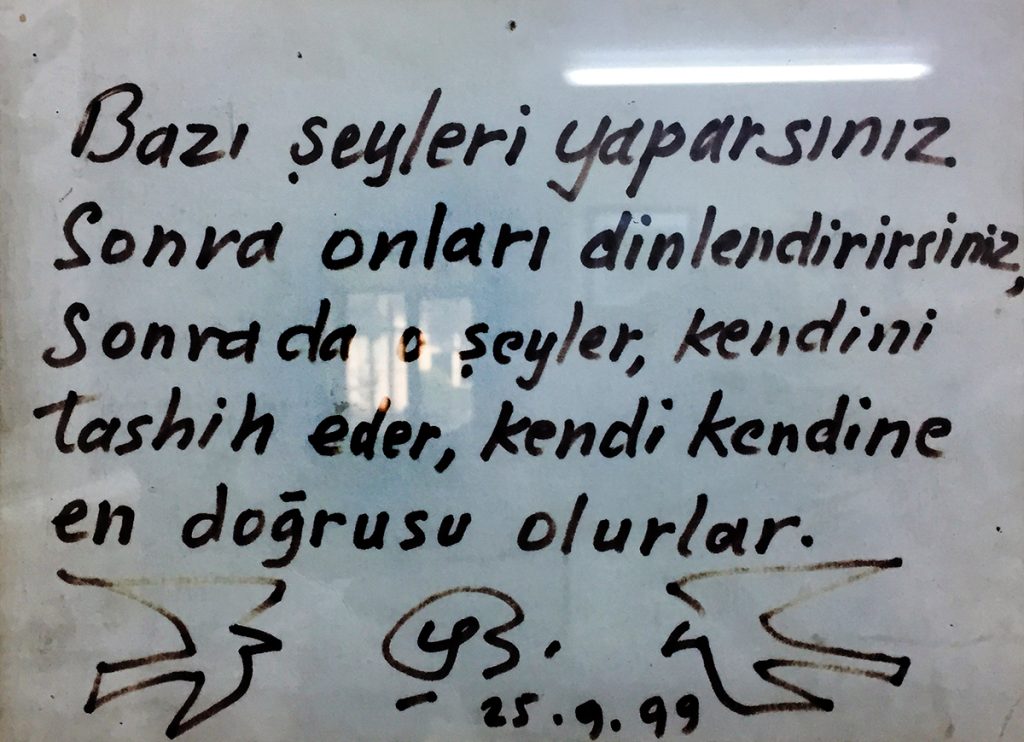
Art Life
Social and cultural movements have a great influence on the processes of innovation and transformation in contemporary Turkish painting. Each artist aimed to develop new forms of expression by feeding on the previous periods and the social structure, in search of finding himself/herself. Especially socialist artists have found their own understanding of art in the unchanging world of the laborers who depend on the land in the process of change, and have processed the stories of these people in their works. Fahri Sümer also approached these worlds with his own style; he built his choice of subject, technique and form on a humanist perspective and a socialist sensibility.
Sümer's works are the product of an understanding of art that combines aesthetic concerns with a conscious search for order, where thought and creativity are intertwined. The painter, who brought a new depth to aesthetic values by addressing social issues, carefully observed the environment in which he lived and tried to pass on his inspiration to future generations by feeding on what he saw, heard and felt.
In his high school years, Sümer showed his talent especially in still life and portrait works, and in the following years, under the influence of the environment he lived in, he turned to landscapes in which he dealt with social themes. These subjects, which he dealt with lovingly and sincerely throughout his artistic life, clearly reflects his socialist side. In the works of the artist, who aimed to reach the essence of everything, the purest form of form, the subjects were composed in a simple order.
The 1968-1980 period in Söke was influential in the artist's paintings in finding a stronger expression of village life.
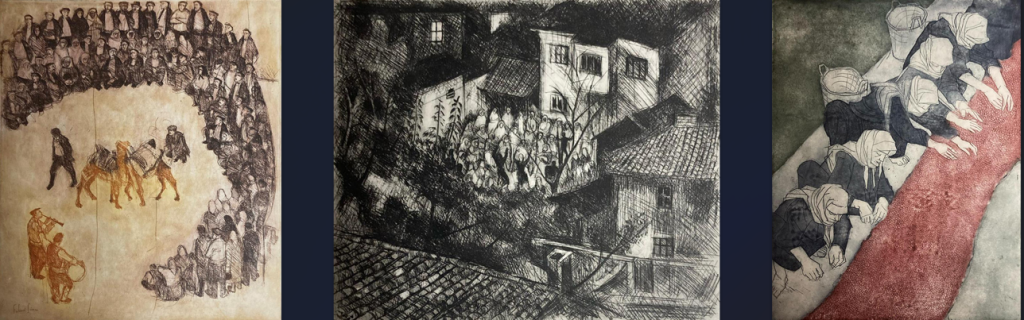
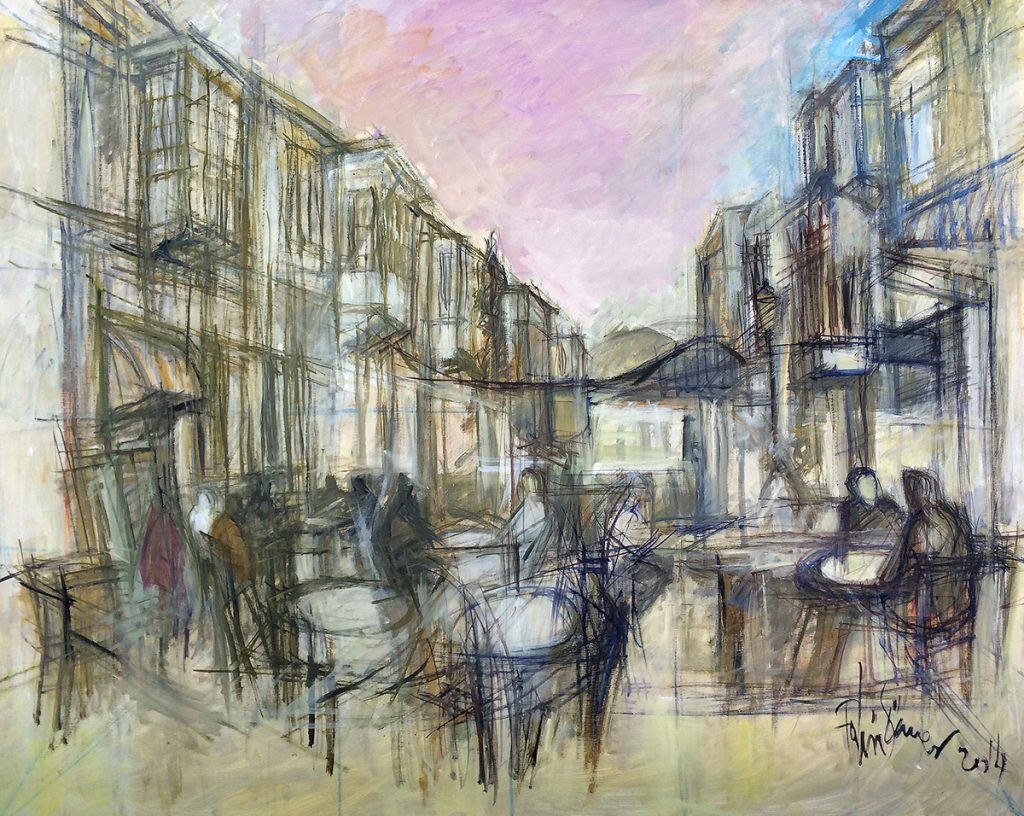
After 1980, when he settled in Izmir, he focused on the city's landscapes, streets and people in his paintings. Sümer, with his paintings about Izmir, is one of the most prominent artists in Contemporary Turkish Painting Art.’Painter of Izmir” in the last two years.
However, she continued to include paintings of village life and working women in every period of her life.
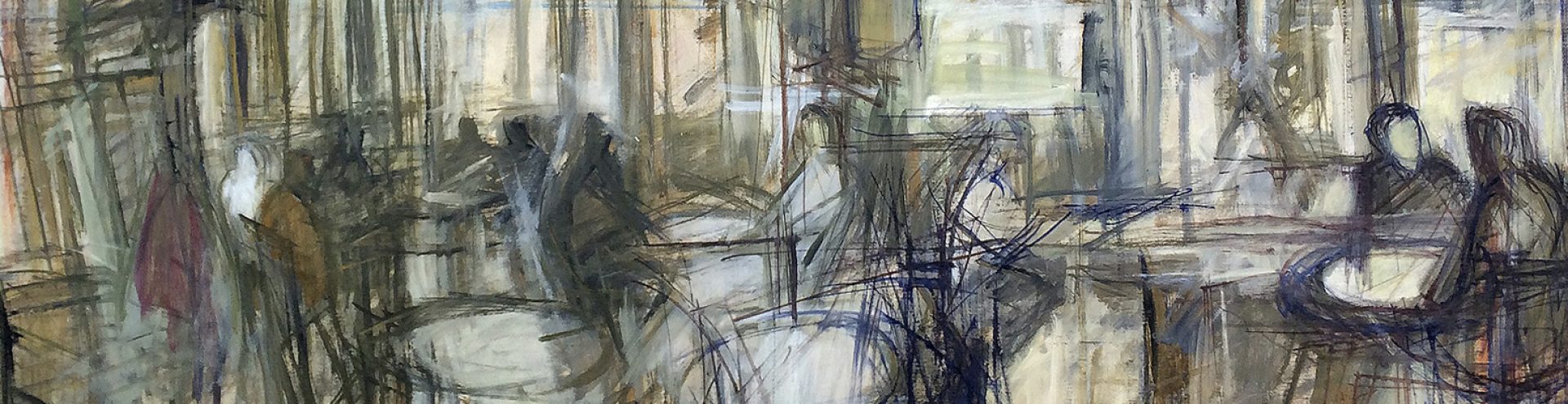
Sümer has skillfully used basic design principles such as space, balance and contrast in his visual artworks. In her paintings, details are strongly emphasized with clear contours and depth of field. While objects in the foreground are represented with clear and sharp lines, as we move towards the background, the details diminish and the forms soften. The contrast between light and shadow creates an impressive rhythm throughout the composition. The artist balances the contrasts, which are especially pronounced in the foreground, with a calmer transition in the background planes.
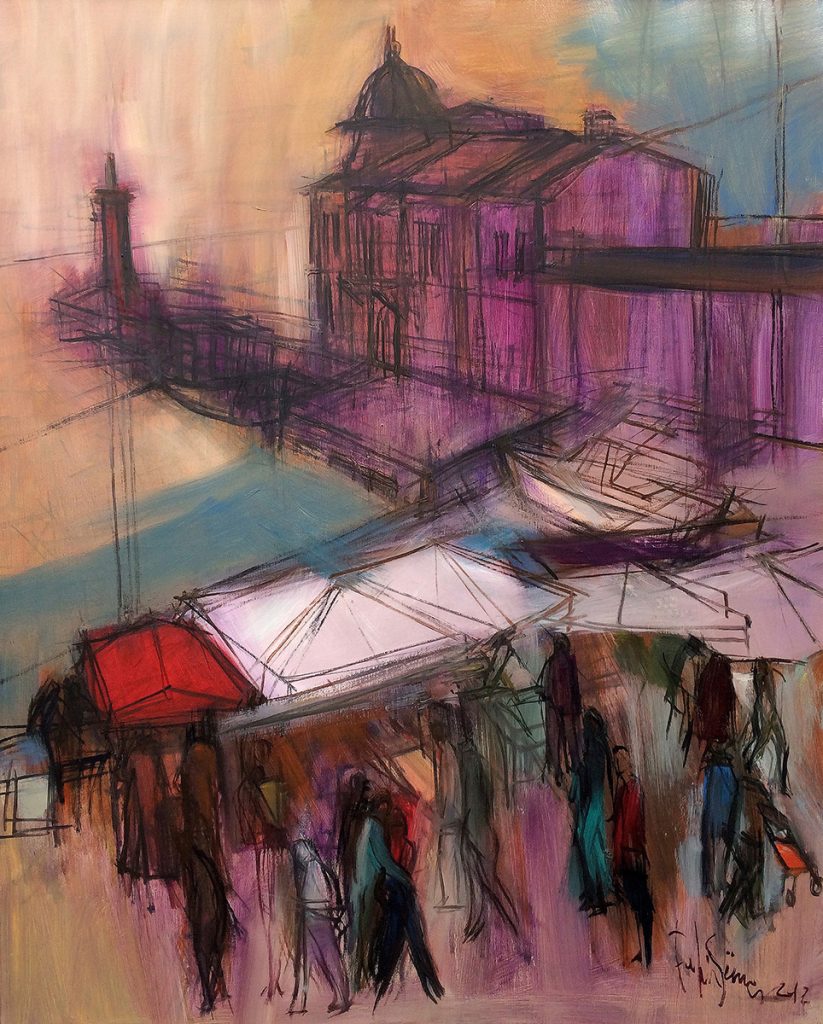
Fahri Sümer adopted a monochrome understanding of color. He mostly creates his works using shades of a single color. The colors he uses express the emotions in the artist's inner world instead of directly reflecting reality. Blue is the dominant color in his paintings. Sümer based this preference on Bedri Rahmi Eyüboğlu's “Blue fisebilillah, red in the lion's mouth” he explains with these words. Yet, in most of his works, he places a small red spot so skillfully that it becomes the most striking point of the painting.
Although Sümer was influenced by Cemal Tollu, Halil Dikmen, Sabri Berkel and Neşet Günal, he differs from them in terms of style. Unlike these artists, he developed his own painting language in a linear style. Although he was inspired by the linear expression in the works of Jean Carzou and Bernard Buffet from world art history, he created a unique formal language dominated by vertical lines. He interpreted the linear surface sensibility with a contemporary understanding by combining traditional Turkish painting with European influences. He is remembered as one of the strongest representatives of the linear style in Turkish painting among his predecessors and contemporaries.
Pattern is the first stage in Fahri Sümer's art where thought transforms into form. In his paintings, the artist first creates the pattern by creating a draft. He took his drawing notebook, which he never separated from his bag, with him wherever he went; he transferred the landscapes he saw and witnessed to paper with charcoal. The sketchbooks in every corner of his studio are the most concrete indication of this approach. From time to time, Sümer made short notes in these sketches, recording the story behind each drawing.
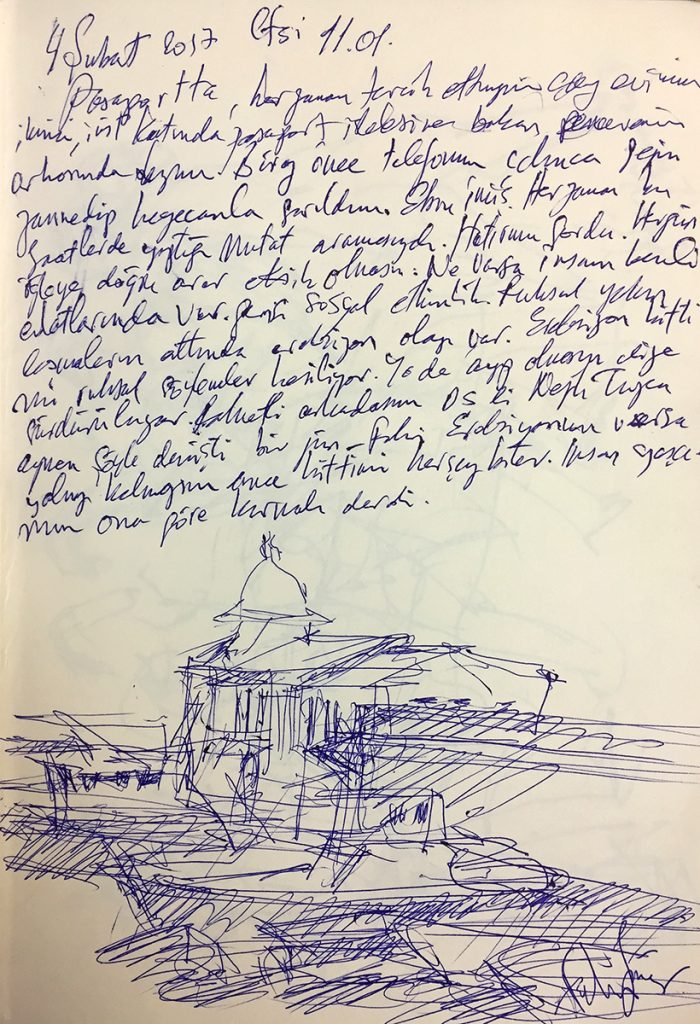
Fahri Sümer describes the place of draft works in his art with the following words:
“The sketch is a very important factor in the formation of my painting. I still carry a sketchbook in my bag. Sketching nourishes the artist and helps to establish a connection with the outside world. When we were students at the Academy, our teachers attached great importance to sketching. Halil Dikmen wouldn't let anyone who didn't draw 15 sketches into the class. Continuous sketching brings a certain quality to the pattern. Drawing has an age. A good teacher understands how old your drawing is, it becomes clear how many years you have been painting” (Ayşenur Arda, interview with Fahri Sümer, 13. 04. 2018, Fahri Sümer's workshop).
Fahri Sümer also has an important place in Turkish painting as an educator. He trained students at Dokuz Eylül University Buca Faculty of Education, Department of Painting and Art Education for 26 years between 1982-2008. He attached great importance to pattern in painting education and instilled this approach in his students. Sümer expressed his understanding of education during his Academy years as follows:
“A good teacher does not copy himself, does not show his own style as the only way. Our teachers would show the students how to apply the design elements of painting and the examples they found successful.”
This approach of his professors at the academy, who encouraged students to find their own style, also formed the basis of Sümer's understanding of education.
Fahri Sümer, who blends the accumulation he received from the masters with his own linear understanding, stands out with his unique style in Contemporary Turkish Painting Art. There is a story in every painting, a sign of life in every line. With his consistent depiction of Izmir's urban life, he is known in the art world as “Izmir's visual poet” is referred to as.